AI-Powered Skill Matching
Finding the right candidate is a challenge that often consumes significant time. Traditional recruitment relies heavily on manual resume screening, a process prone to overlooking hidden talents or getting bogged down by irrelevant information. You might spend hours reviewing a stack of CVs for a Project Manager role, only to find that crucial skills like stakeholder communication or risk management are buried in descriptive paragraphs, not clearly itemized.
Moving Beyond Keywords: The Core of AI Skill Matching
AI-powered skill matching shifts this paradigm. Instead of simply searching for keywords like "Scrum Master" or "Java development," this technology analyzes the context of a candidate's experience. It evaluates entire career paths, project descriptions, and educational backgrounds to build a comprehensive skill profile. For instance, an AI tool doesn't just register "budget responsibility"; it can infer a candidate's proficiency in financial oversight by examining years of experience managing project budgets up to 500,000 SEK.
What AI Sees in a Profile: Deeper Insights
Modern AI recruitment tools use natural language processing (NLP) to understand the nuances of human language. This means they can identify synonyms, recognize related concepts, and even infer soft skills from descriptions of past achievements. A candidate's ability to "lead cross-functional teams" for three years might signal strong leadership and collaboration skills, even if those exact words aren't explicitly listed under a "skills" section. This contextual understanding helps surface candidates who might not perfectly match a keyword search but possess the underlying competencies needed to excel. It can pinpoint a developer who regularly contributed to open-source projects, indicating initiative and problem-solving, even without explicit mentions in their job history.
Practical Benefits for Hiring Managers
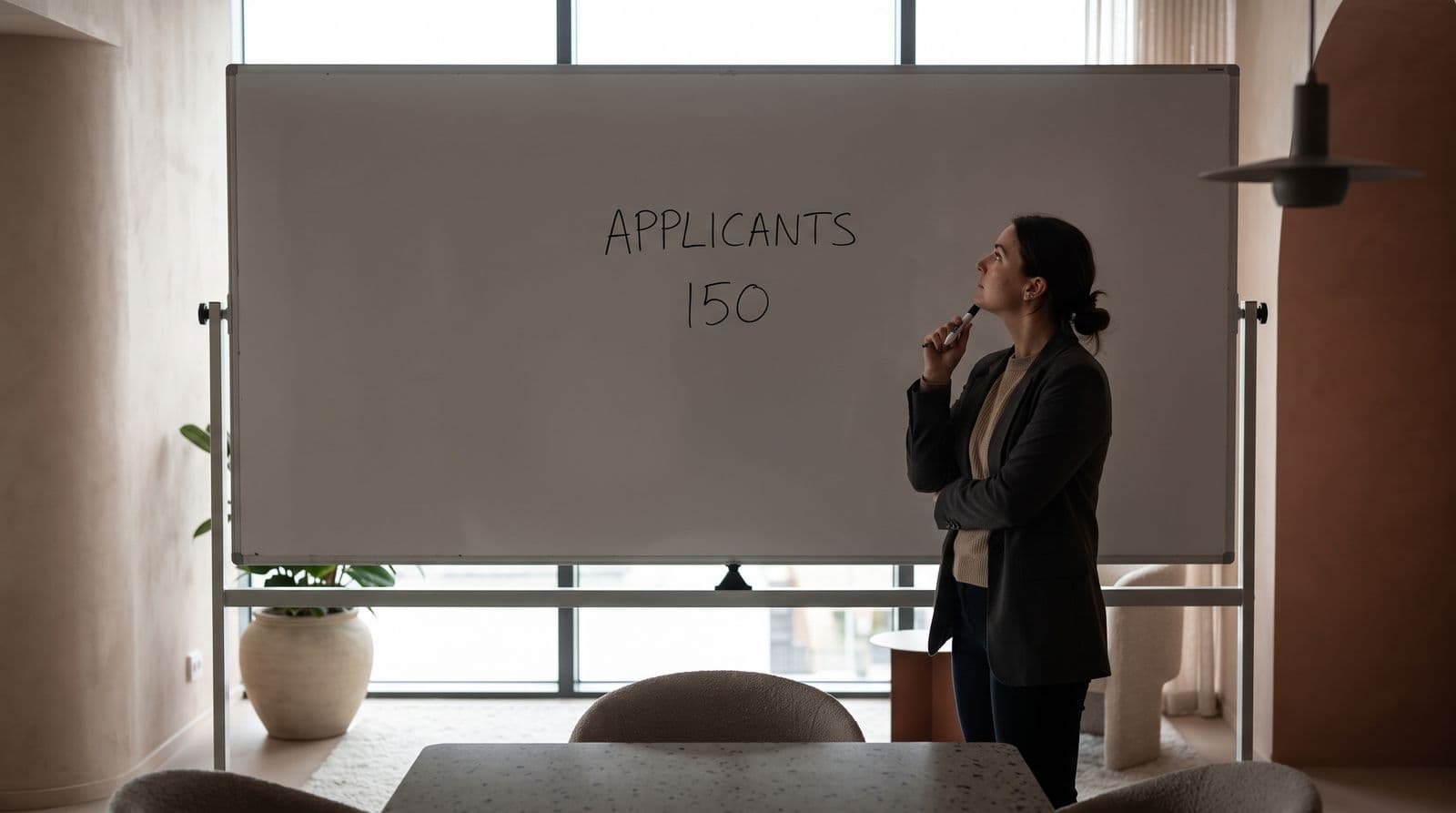
For HR leaders and hiring managers, the practical advantages of AI skill matching are immediate and tangible. It streamlines the initial stages of recruitment, allowing your team to focus on strategic tasks rather than administrative ones. Imagine the difference between manually sifting through 150 applications for a Marketing Specialist role and receiving a pre-screened list of the top 10 most relevant candidates.
Faster Screening, Smarter Shortlists
AI dramatically reduces the time spent on screening. A human recruiter might take 4-6 hours to manually review 100 applications, searching for specific skills and experience. An AI system can process those same applications in minutes, providing a ranked list based on predefined criteria. This speed means you can move from job posting to first interviews within days, not weeks. For small businesses, where every hour counts, this efficiency can translate into significant cost savings and quicker fulfillment of urgent roles, like hiring a crucial sales representative before the end of a fiscal quarter.
Reducing Unconscious Bias in Selection
One of the most valuable aspects of AI skill matching is its potential to mitigate unconscious bias. Humans, often unknowingly, are influenced by factors like names, educational institutions, or the format of a resume. AI, when properly configured, focuses purely on the objective match between a candidate's skills and the job's requirements. It prioritizes relevant experience over superficial characteristics, ensuring a fairer evaluation process. For example, if your job description for a software engineer emphasizes Python and cloud architecture, the AI will prioritize candidates demonstrating those competencies regardless of their gender or age, leading to a more diverse talent pool over time.
Implementing AI Skill Matching in Your Process
Integrating AI skill matching doesn't require a complete overhaul of your existing HR processes. Instead, it acts as a powerful augmentation, enhancing the precision and speed of your initial candidate identification.
Defining a Precise Skill Profile
The effectiveness of AI skill matching hinges on the clarity of your job description and the defined skill requirements. Before posting a role, outline the essential technical and soft skills, along with desired proficiency levels. For a Customer Success Manager, this might include specific CRM software experience (e.g., Salesforce, HubSpot) ranked on a scale of 1-5, alongside communication and problem-solving skills. The more detailed and specific your skill profile, the more accurately the AI can match candidates. Clearly defining these parameters ensures the AI understands exactly what you need, filtering out candidates who might superficially appear qualified but lack core competencies.
Leveraging Platforms for Automated Matching
Platforms like Recruiting Rewards are built to integrate AI skill matching directly into your hiring workflow. When you post a job on Recruiting Rewards with a clear skill profile, the platform's AI instantly analyzes our network of independent recruiters' candidate pools. It identifies candidates whose skills, experience, and even inferred potential align most closely with your requirements. This eliminates the guesswork for both you and the recruiters, ensuring that only highly relevant profiles are submitted for your consideration. The reward structure, where payment is made only when a candidate starts, reinforces the focus on successful, high-quality matches.
The Future is Collaborative: AI and Human Expertise
AI in recruitment is a tool designed to empower human decision-makers, not replace them. While AI can efficiently identify skill matches and reduce bias in initial screening, the final hiring decision always rests with your team. Human intuition, cultural fit assessment, and the ability to evaluate a candidate's long-term potential within your specific company culture remain invaluable.
Use AI to generate a strong shortlist, then dedicate your valuable interview time to deeper conversations about collaboration style, career aspirations, and how a candidate fits into your team dynamic. This ensures you hire individuals who not only possess the right skills but also thrive within your organization. A successful hire for a key accounting position, for instance, requires technical proficiency in tools like Fortnox, but also a personality that integrates well with the existing finance department, something only human interaction can truly ascertain.
Read next
Maximize Your Network as a Freelance Recruiter: Tips for More Successful Matches
Discover actionable strategies for independent recruiters to build, leverage, and maintain a powerful professional network.
8 minBuild a Dynamic Talent Pool with AI Support for Future Recruitments
Learn how to establish a vibrant talent pool using AI, moving your recruitment efforts from reactive to proactive.
9 minWhat a Hire Actually Costs: A Practical Breakdown for Swedish Employers
Understanding the true cost of a new hire goes beyond salary. This guide breaks down direct, indirect, and hidden expenses so Swedish employers can optimize…
8 min